John Tearpock
Connect with me
The Lost Prison
Design & Programming
Basic Info
Capstone Project
Unity & C#
Team Size: 3
Duration: ~4 months | 2021
Contributions
- Designed & implemented a dynamic system of interactable doors & locks
- Designed easily customizable Enemy AI combat behavior
- Created the system to dynamically change music tracks based on combat status
- Implemented Lock-On System for both Camera and Throwable Objects
- Adapted checkpoint system into fast travel & level select systems
Contributions extended
- Implemented the Save/Load System
- Created Inventory System
- Designed and programmed the Main Menu & Options Menu
- Weapon Swapping System
- Block & Parry system
- Player Movement
SCRAPS
Level & Gameplay Design
Basic Info
School Project
Unity & C#
Team Size: Solo
Duration: ~2 months | 2020
For this project we were given part of a game: Player character, movement, base gameplay mechanic, and lore. We were tasked with creating a level and at least 1 new mechanic that fit the existing game.
We were split into groups and independently made our own levels plus a connecting area between our level and the next person’s level to make the “final game” as it were. My work was done entirely solo.
Contributions
- Designed and built a level from graybox through to final art pass
- Used design principles such as color, light, and leading lines to guide the player through my level
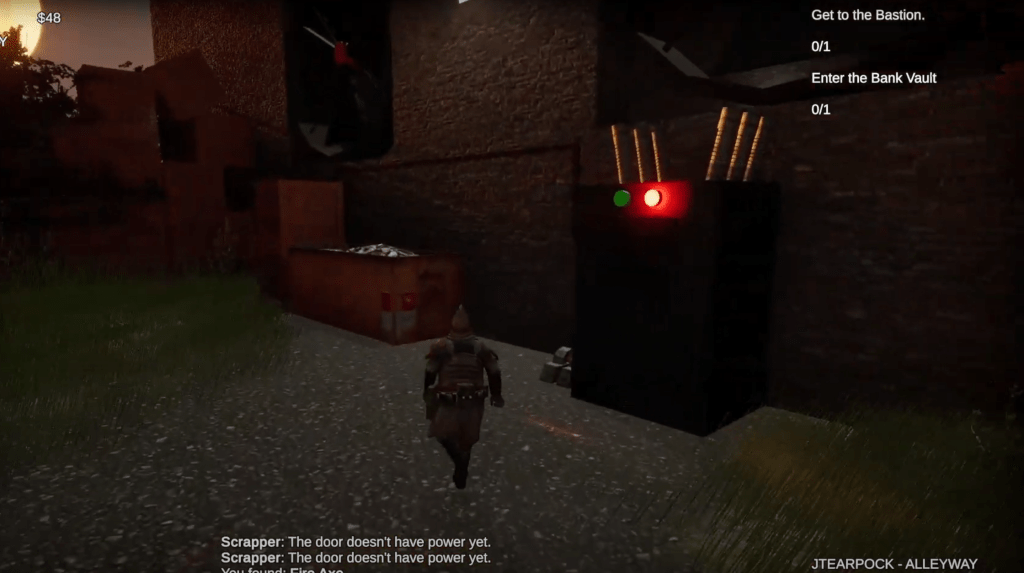
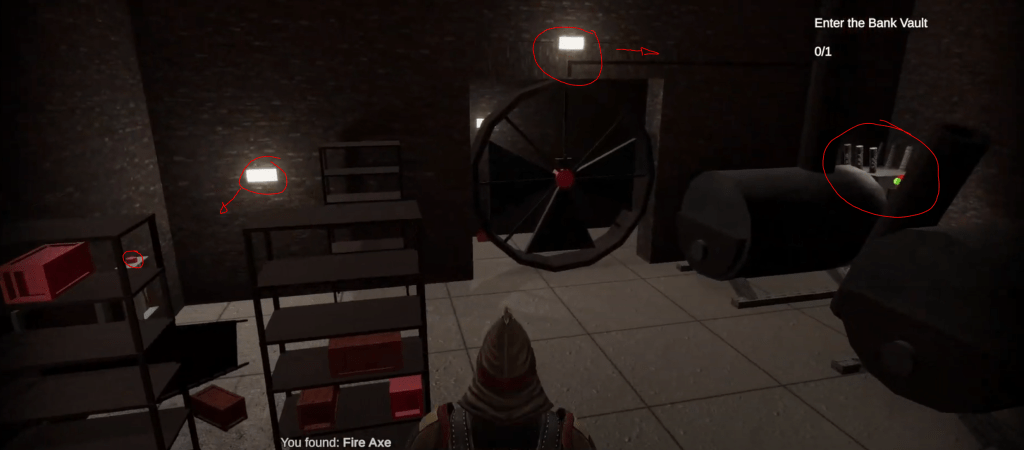
- Designed & implemented unique mechanics that fit thematically into an existing game’s framework
- Imported or created art assets & decorated the entire level
- Designed & built transitional area from my level to teammate’s level
Marble Run
Level & Gameplay Design
Basic Info
Personal Project
Unreal 5 & Blueprints
Team Size: Solo
2023
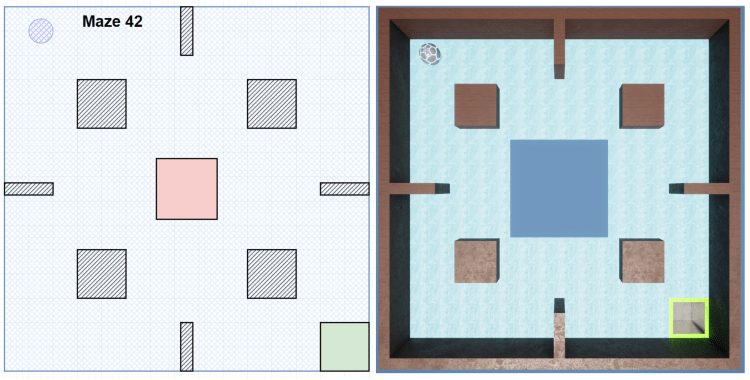
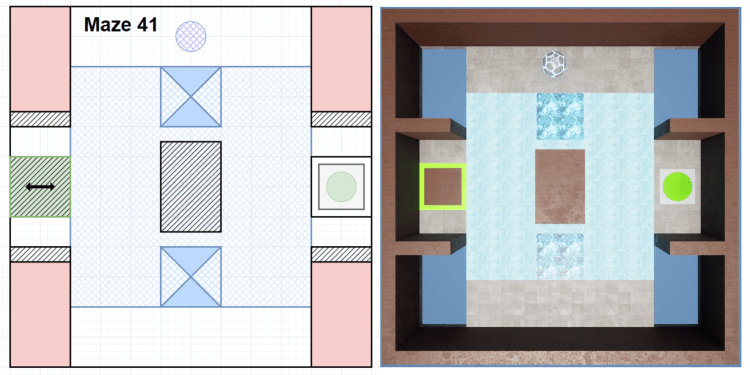
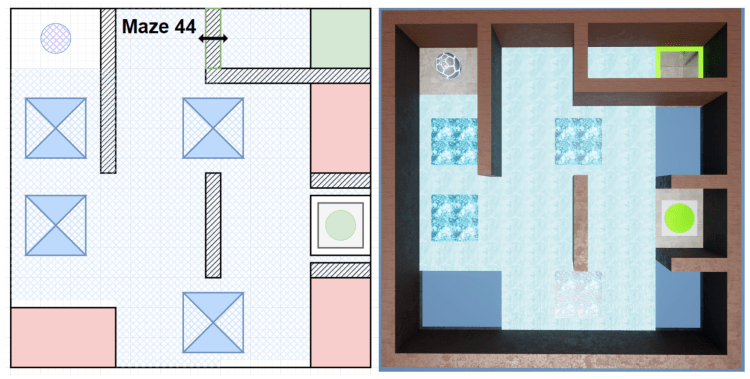
This project started as a tutorial to learn Unreal. Following along with that I created the basic gameplay of manipulating the floor to roll the ball. From there I expanded on to it by adding new mechanics & creating levels around those mechanics.
Contributions
- Created levels that introduced & taught new mechanics to players
- Focused on creating a smooth difficulty curve in each zone
- Combined mechanics in interesting ways
- Prioritized user experience & level readability
- Designed with intent
- Iterated on level designs from paper design to final design
- Iterated on my design & implementation processes to improve workflow
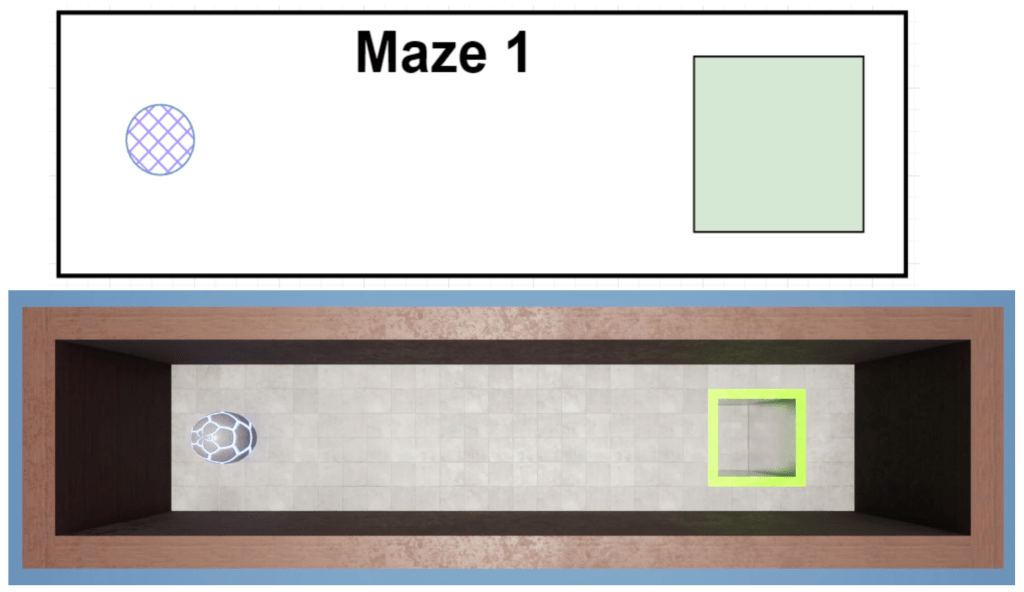
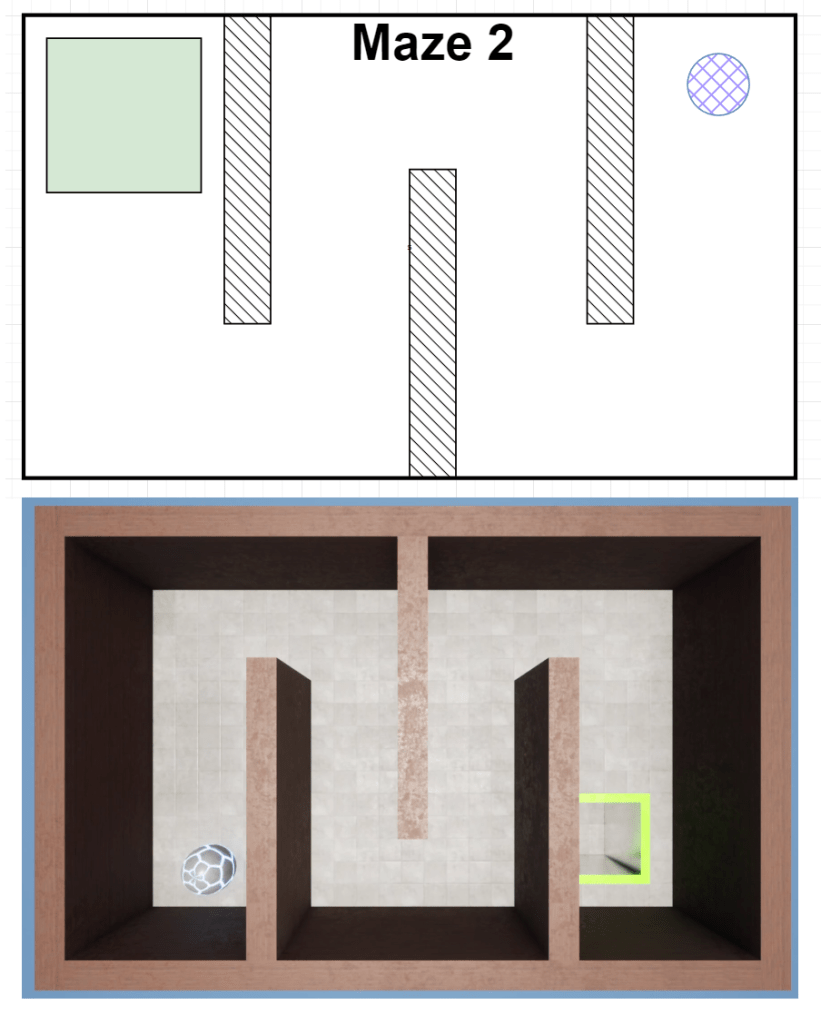
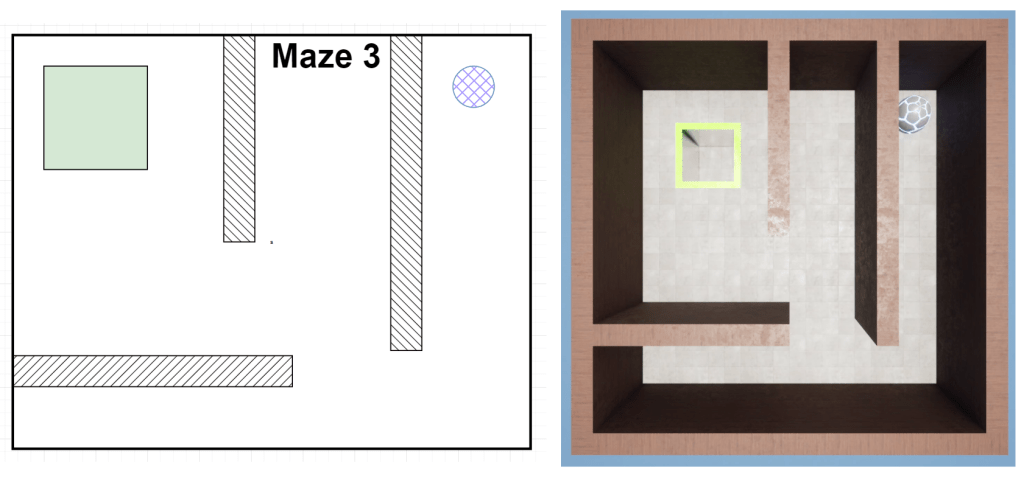
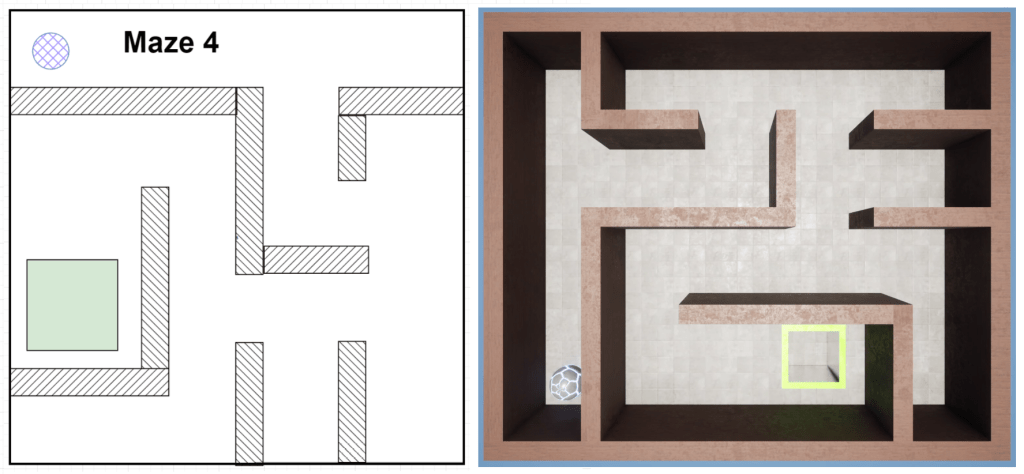
Zone 1: Tutorial
Design Goal: Create simple levels so players can familiarize themselves with the basic controls.
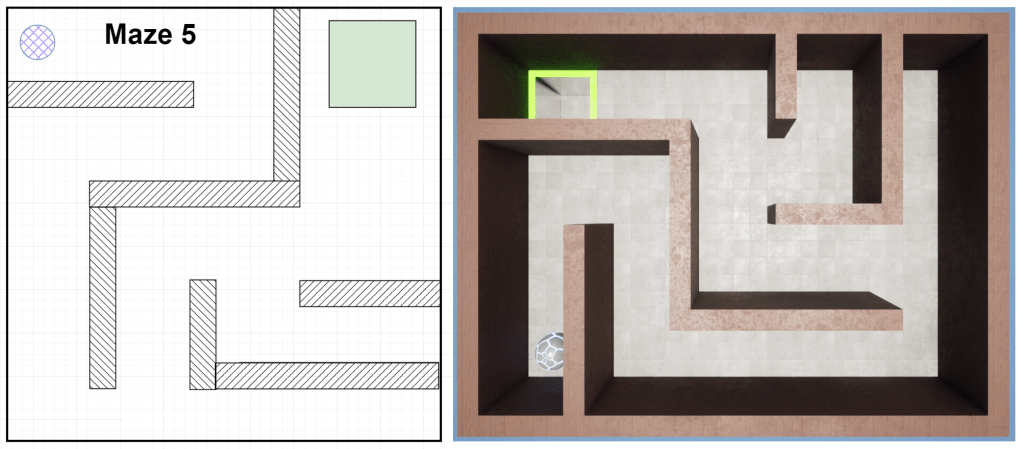
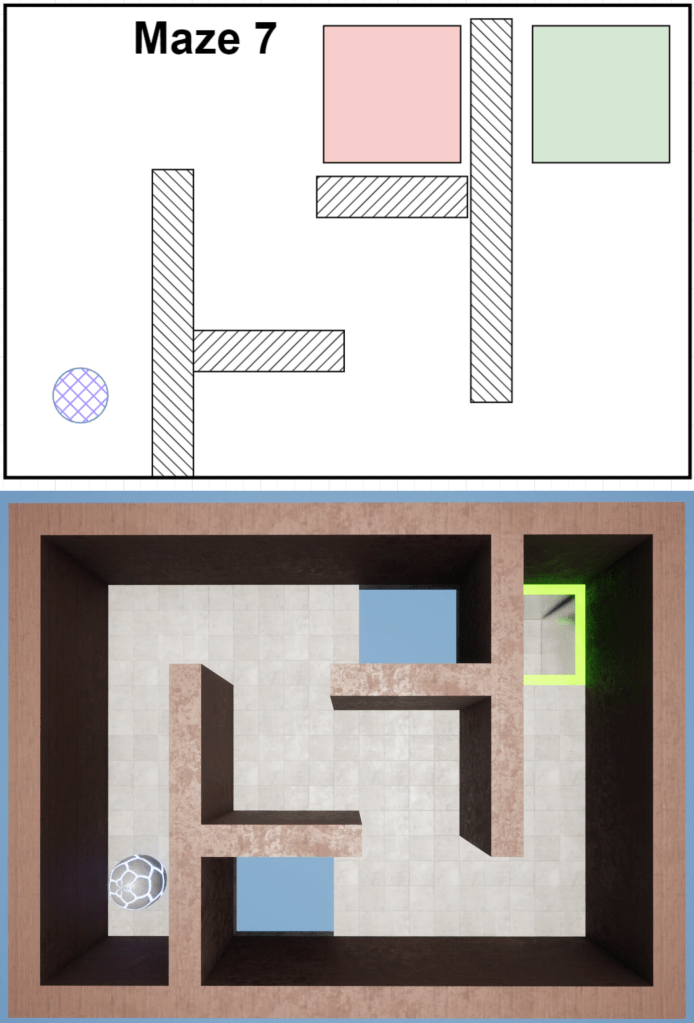
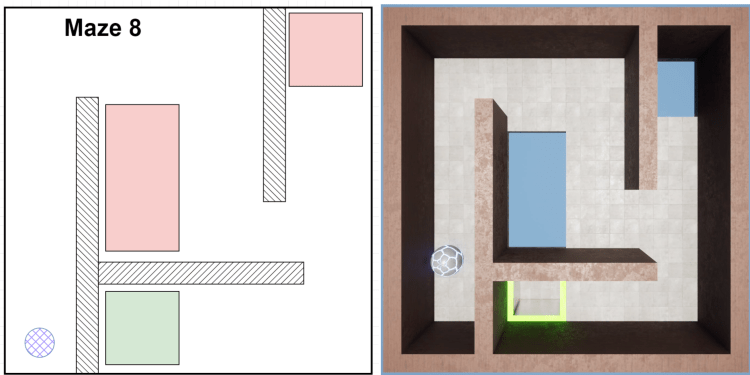
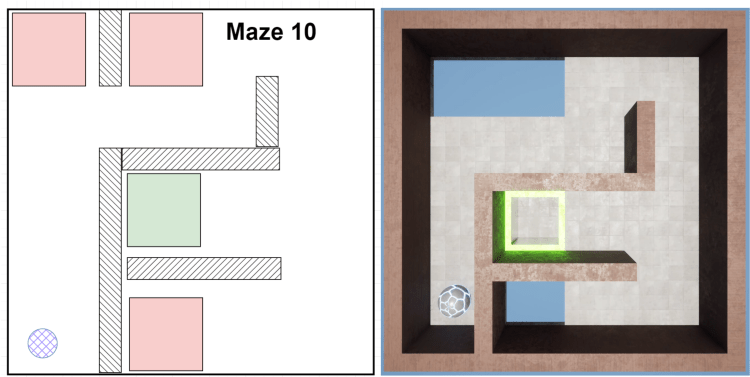
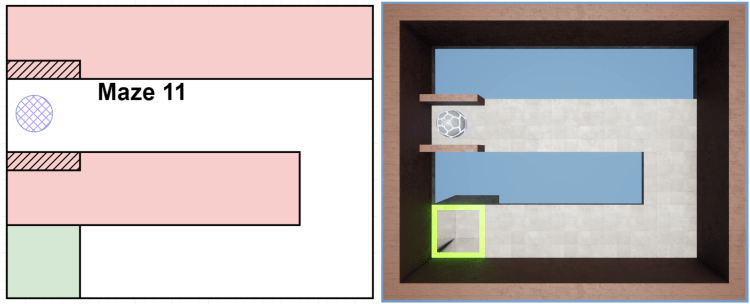
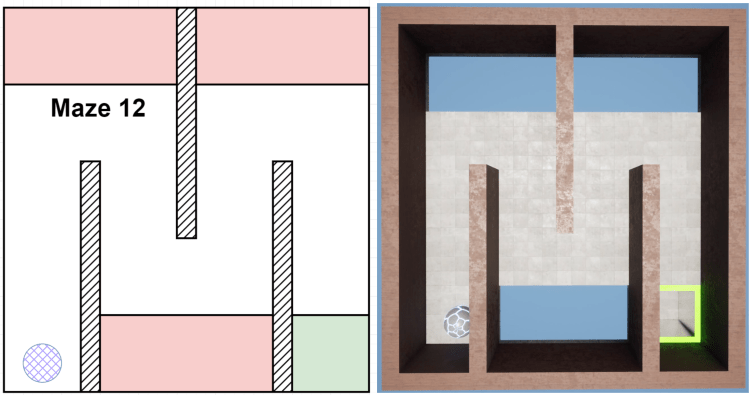
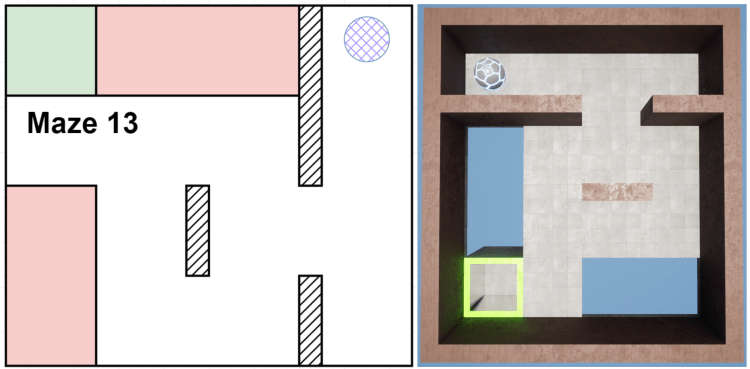
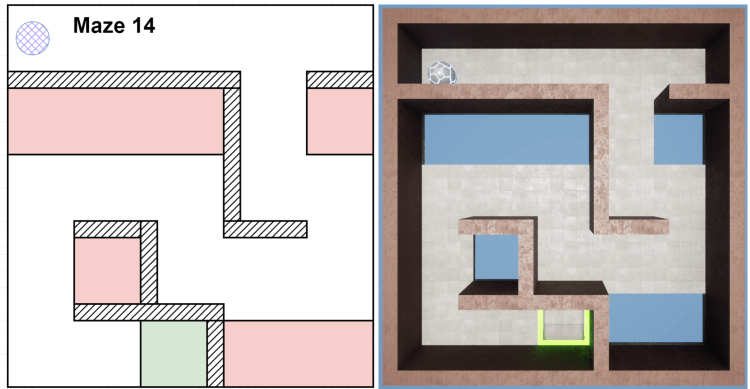
Zone 2: Holey Roller
New Mechanic: Pitfalls
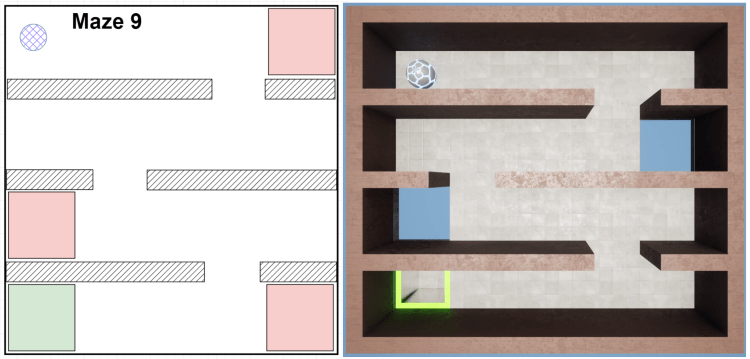
Design Goal: Introduce the first hazard for players to avoid. Designed levels with the intent that precision wasn’t inherently expected, but it was encouraged and they need to have more control than before.
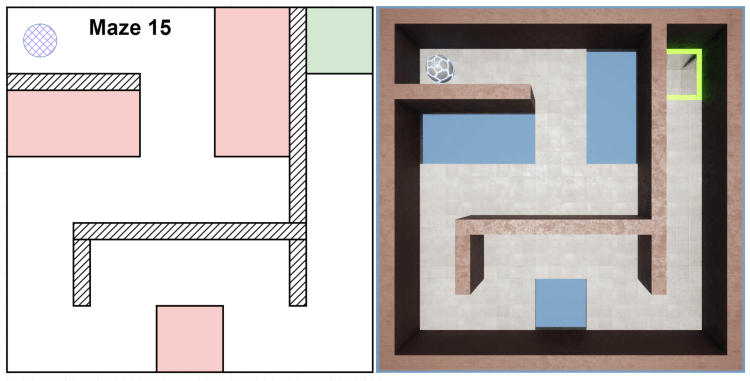
Design Analysis (Maze 9)
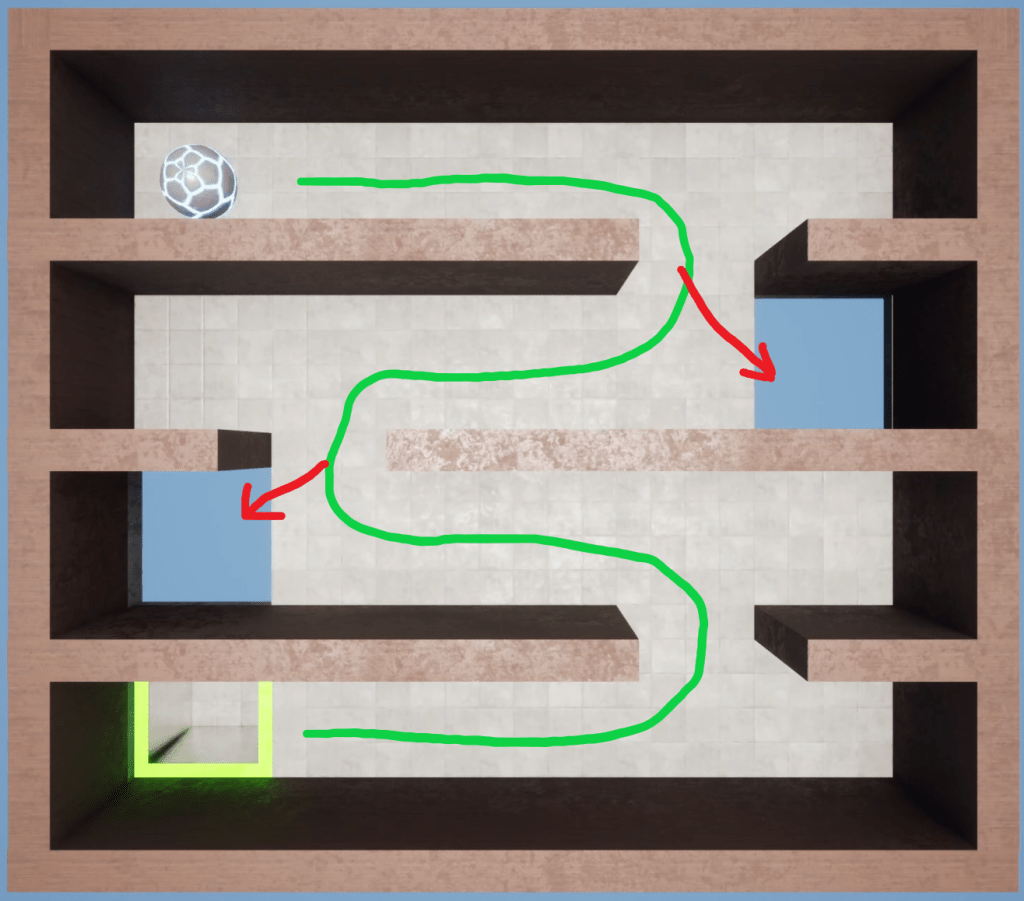
Method A (Controlled)
Player can attempt the level in full control, navigating carefully around corners but risking rolling into a pit.
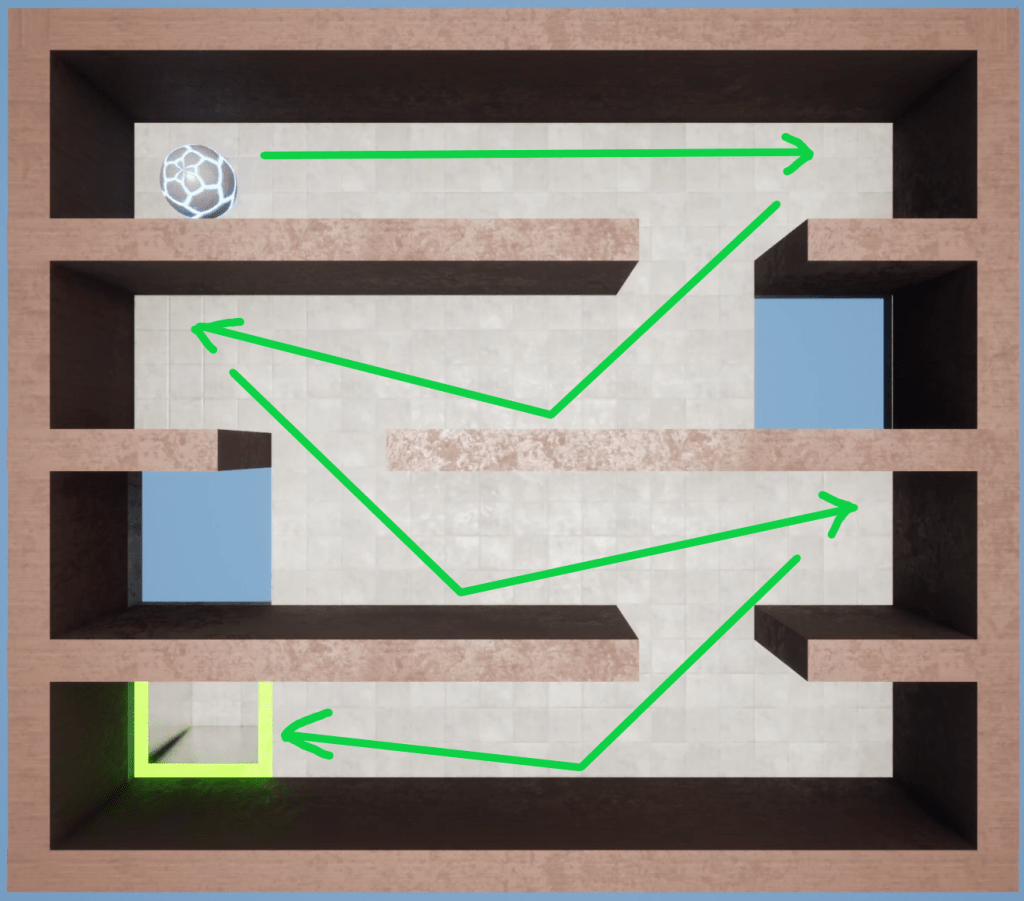
Method B (Safe)
Player can play it safe and roll into pockets to catch themselves, largely avoiding pits entirely.
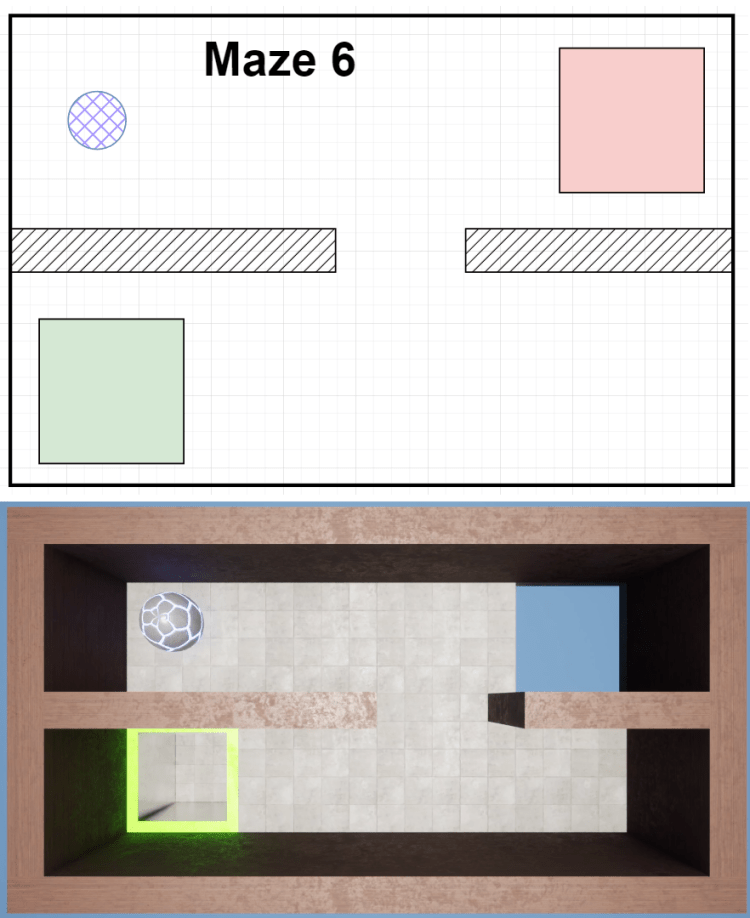
Zone 3: Breakthrough
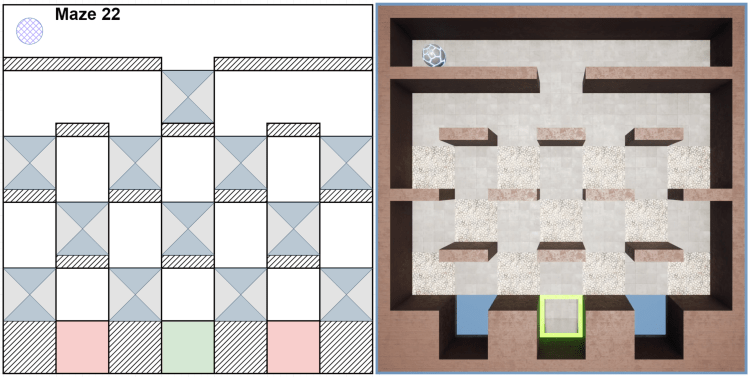
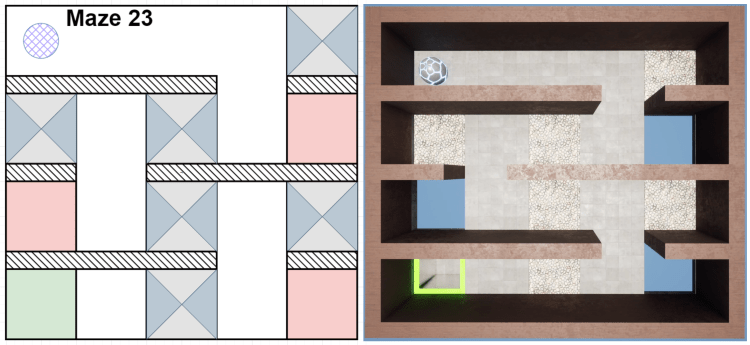
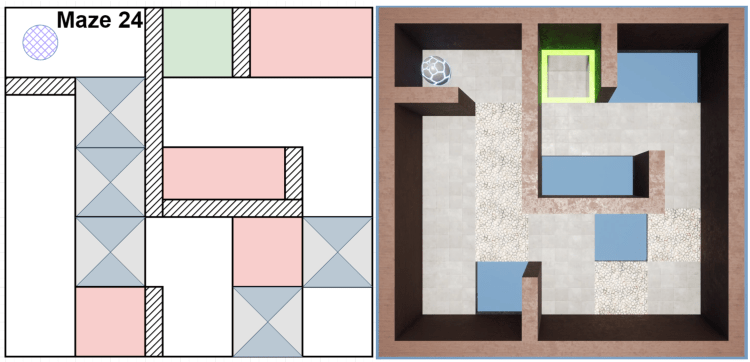
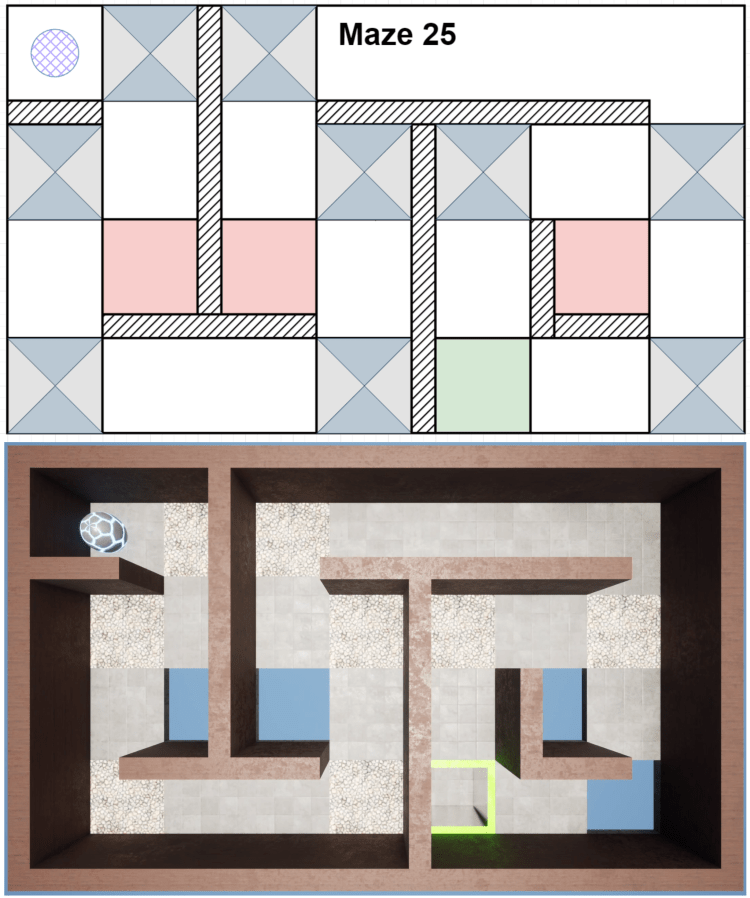
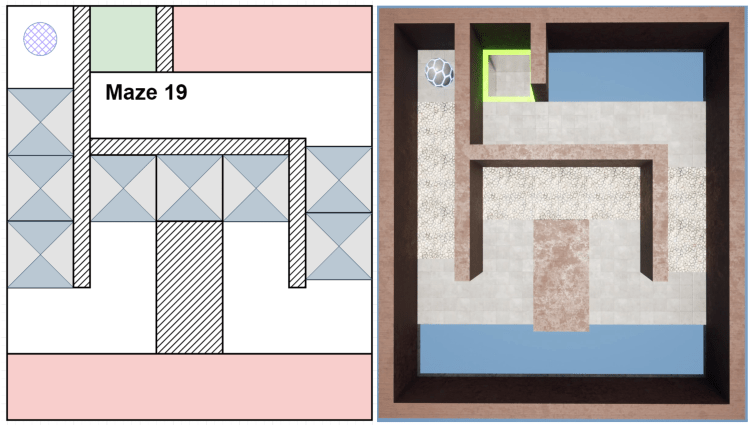
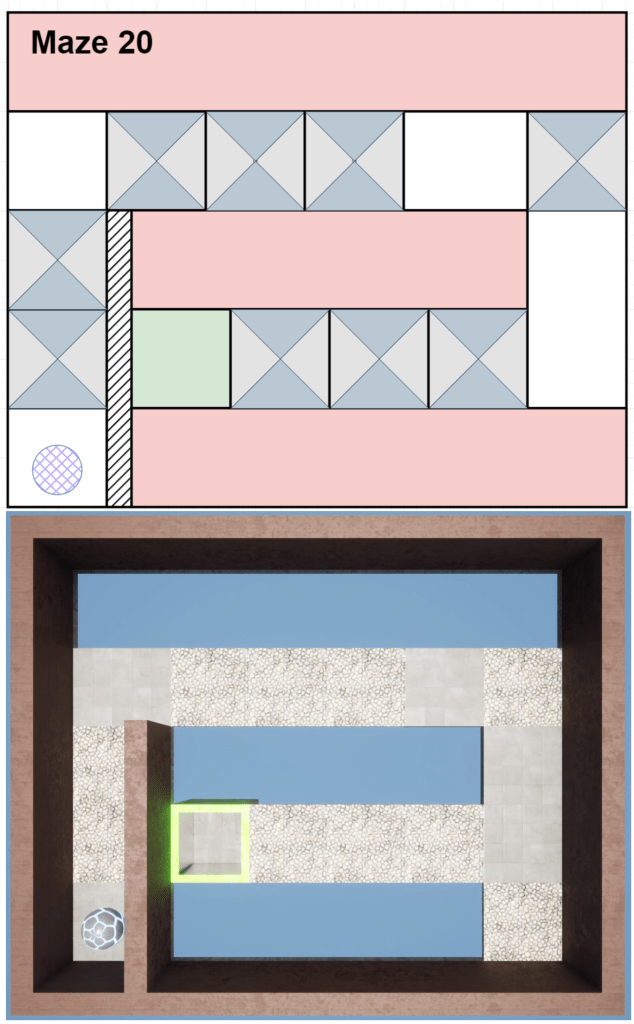
New Mechanic: Breakaway Floors (Trapdoors)
Design Goal: Introducing breakaway floors with the goal of teaching the player to plan ahead and move decisively while under control.
Level Highlights
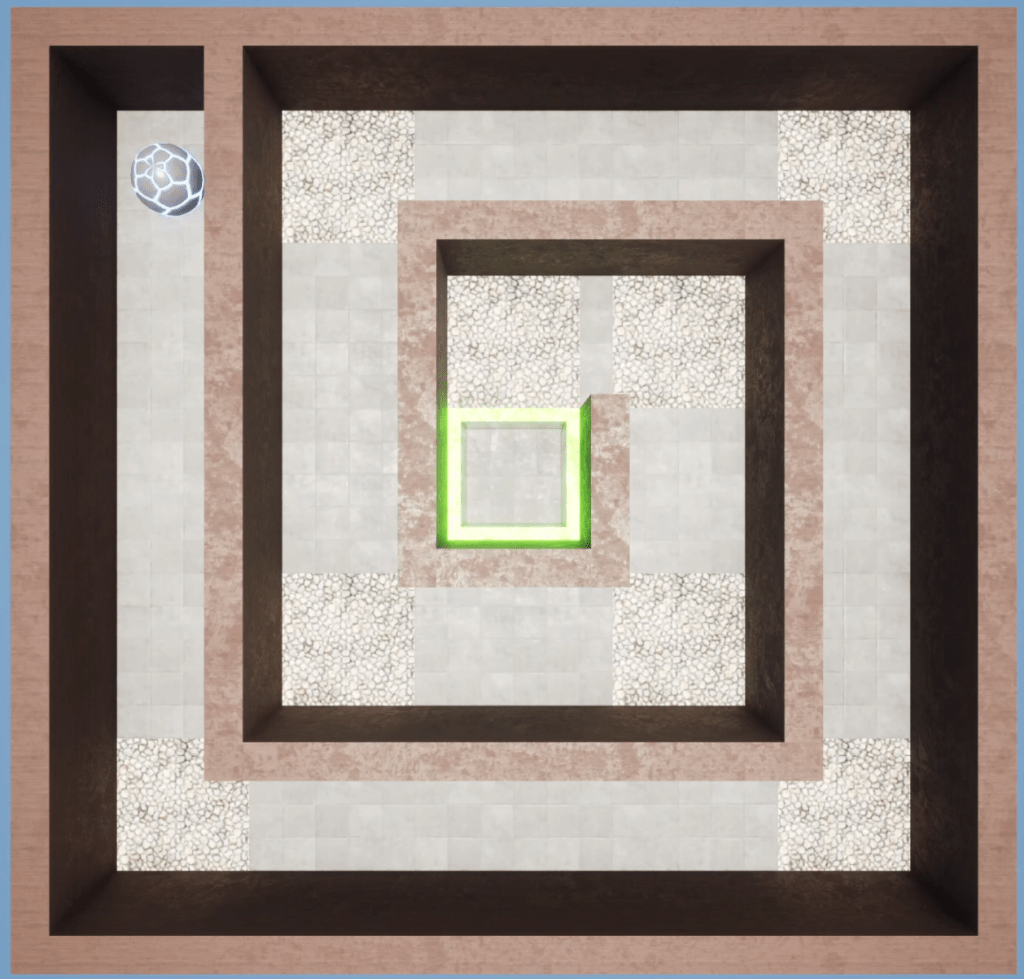
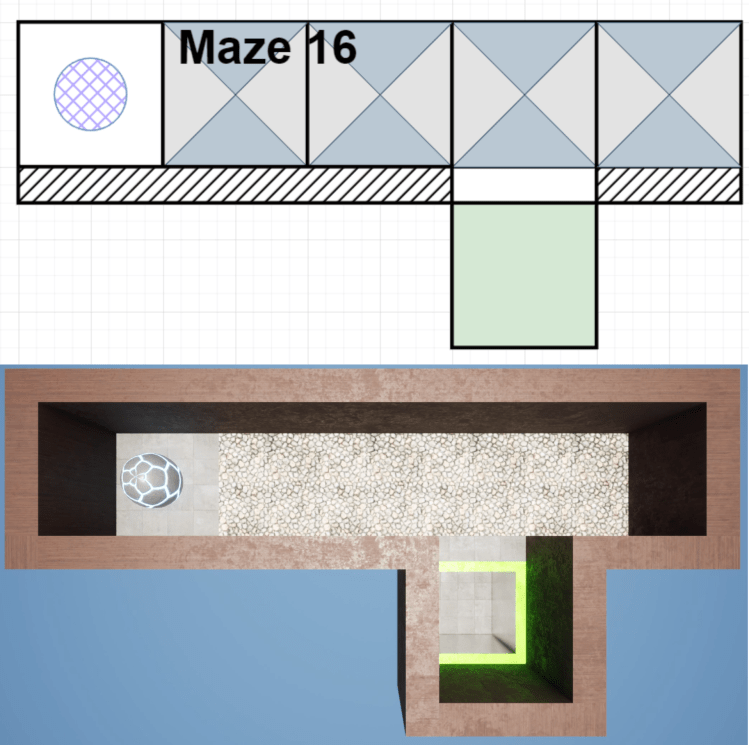
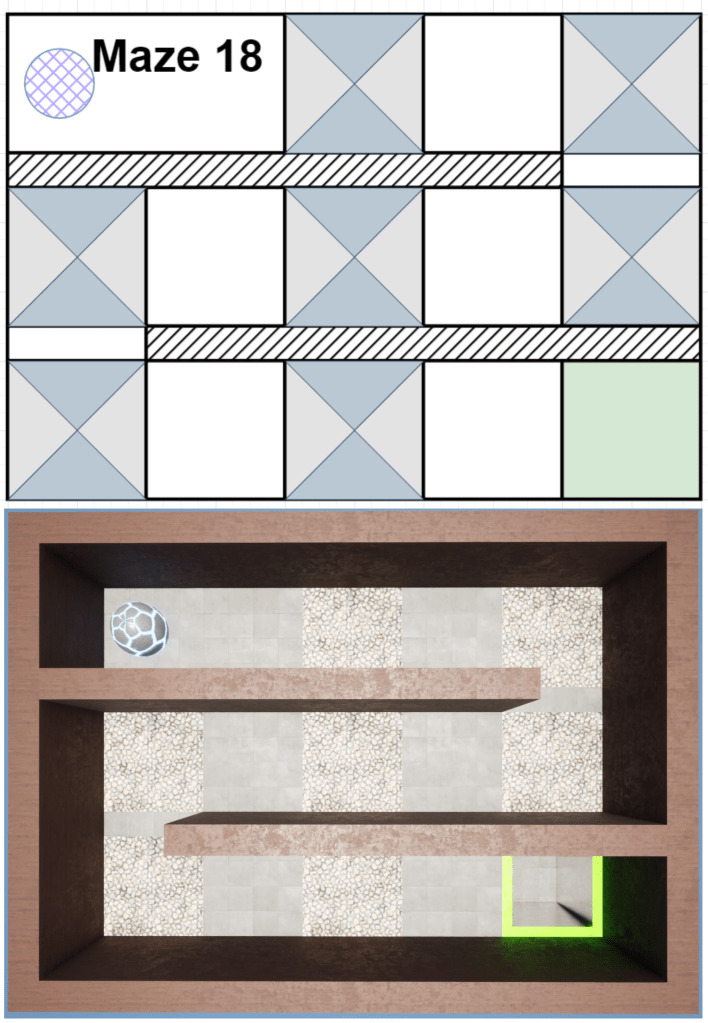
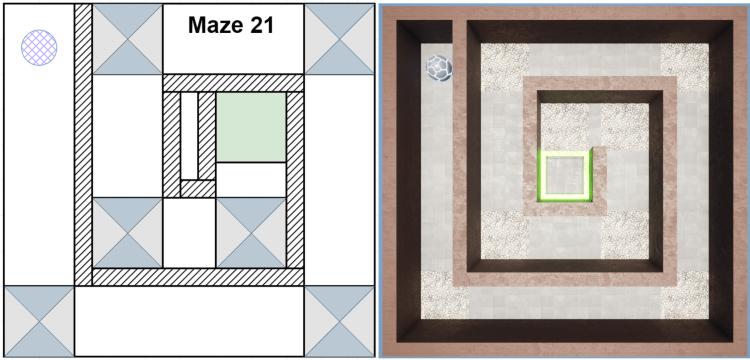
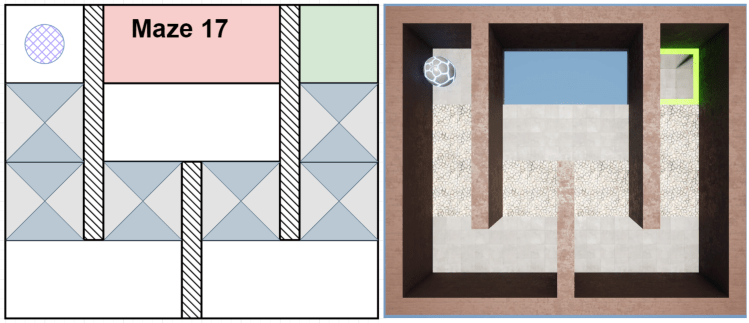
Level 3-3 (Maze 21), keeps the player moving and teaches them through repetition to quickly change directions to avoid getting stuck in corners.
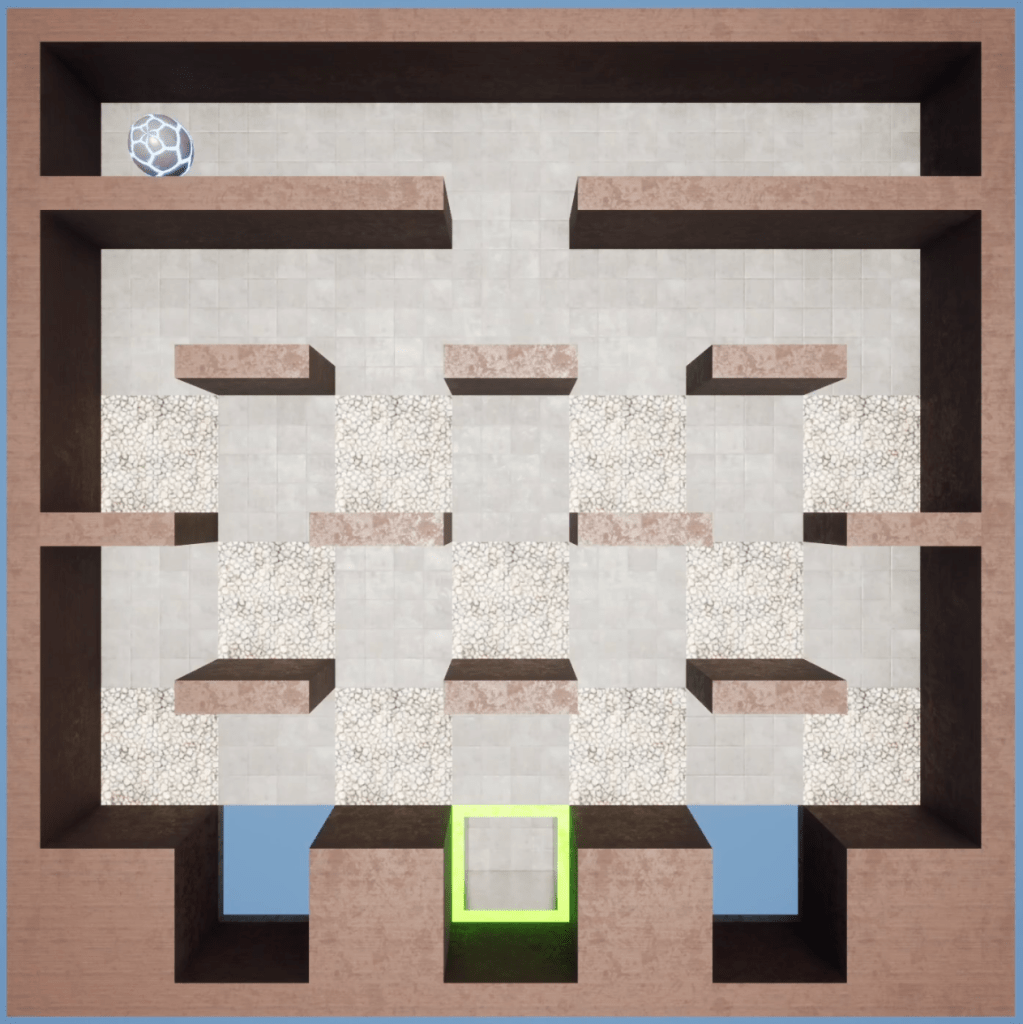
Level 3-5 (Maze 22) is all about the player planning their route. Getting stuck in one spot too long can quickly lead to failure.
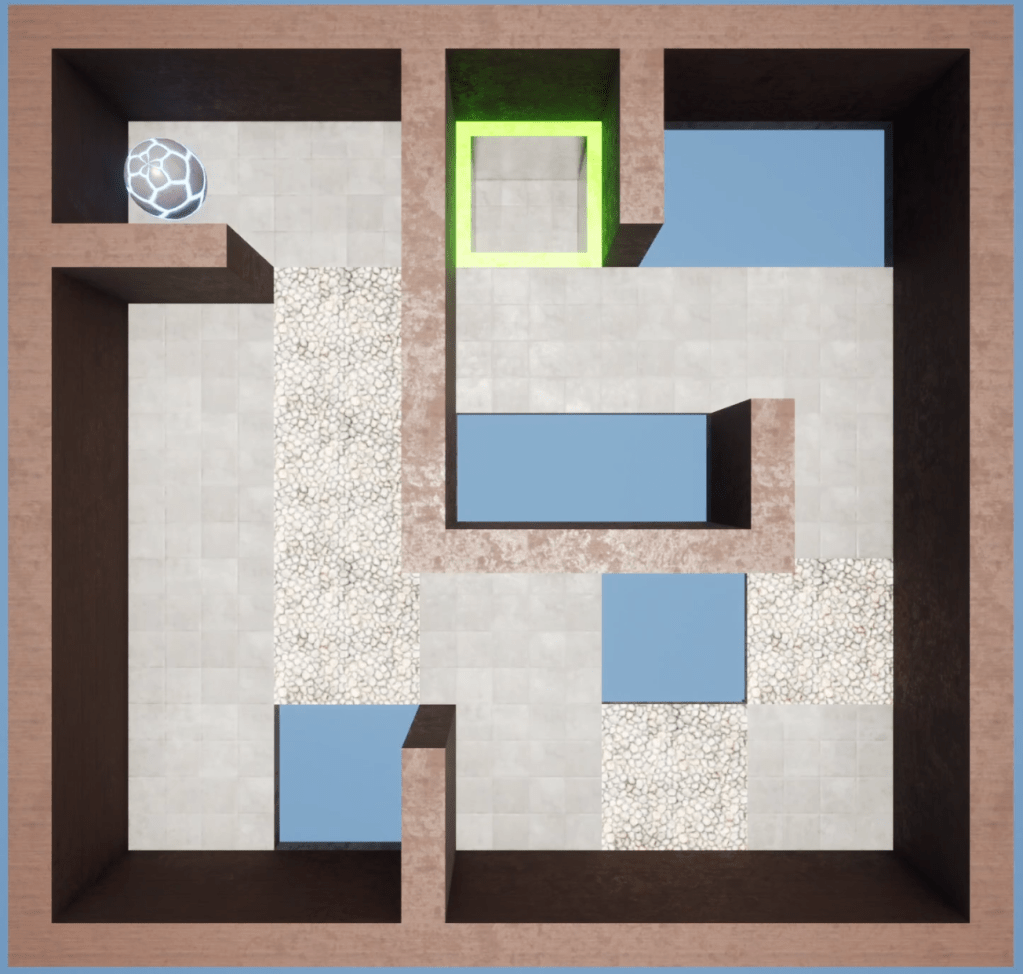
Level 3-7 (Maze 24) has multiple locations where the player has to remain in control & alternate speeds; quick over a trap and immediately slow down or turn to avoid a hole.
Zone 4: Open Sesame
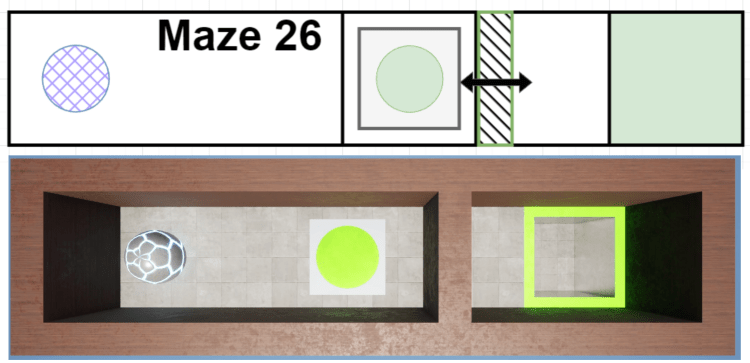
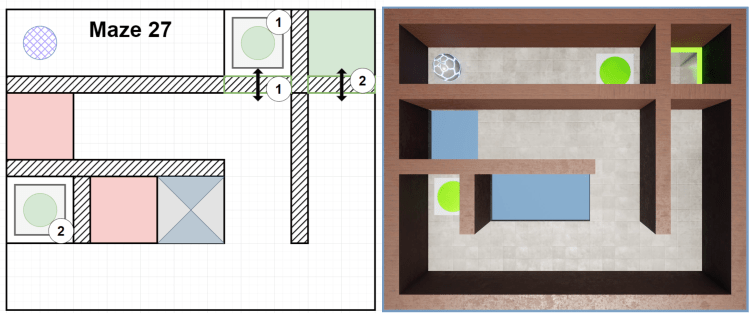
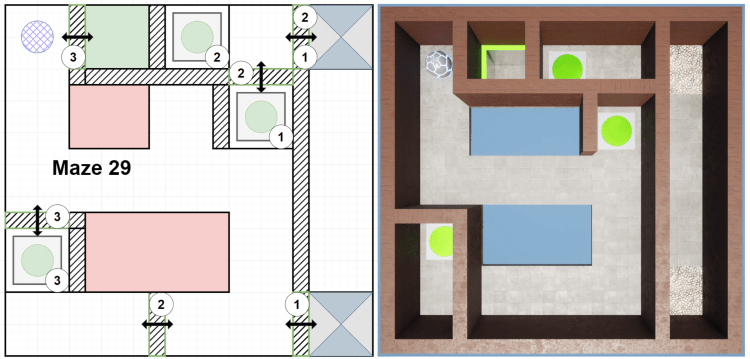
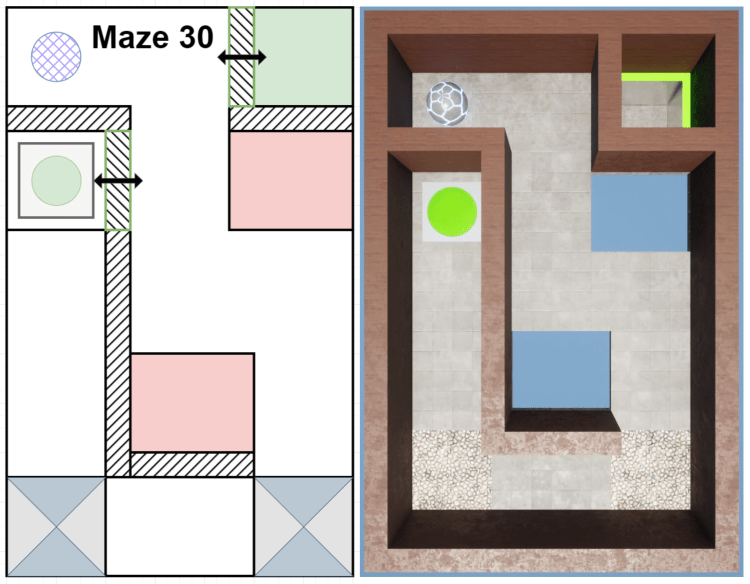
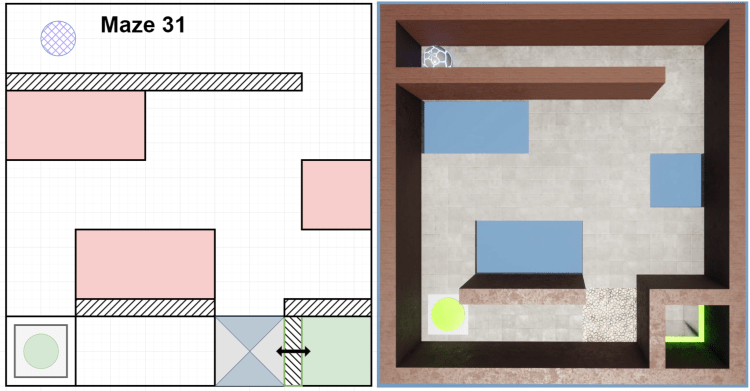
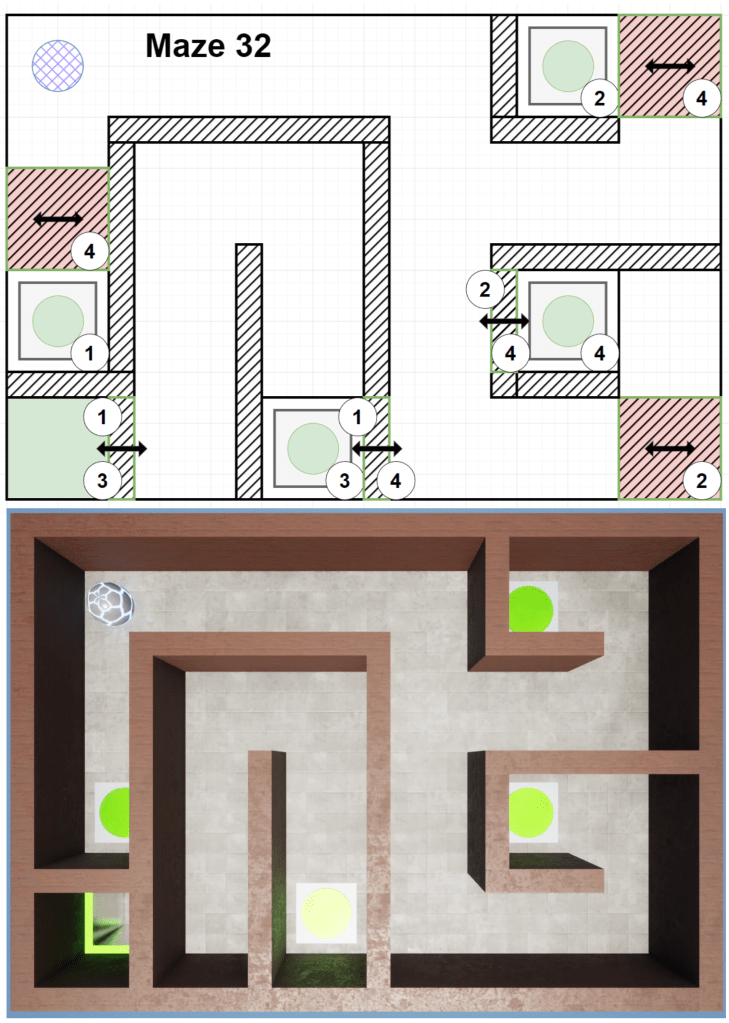
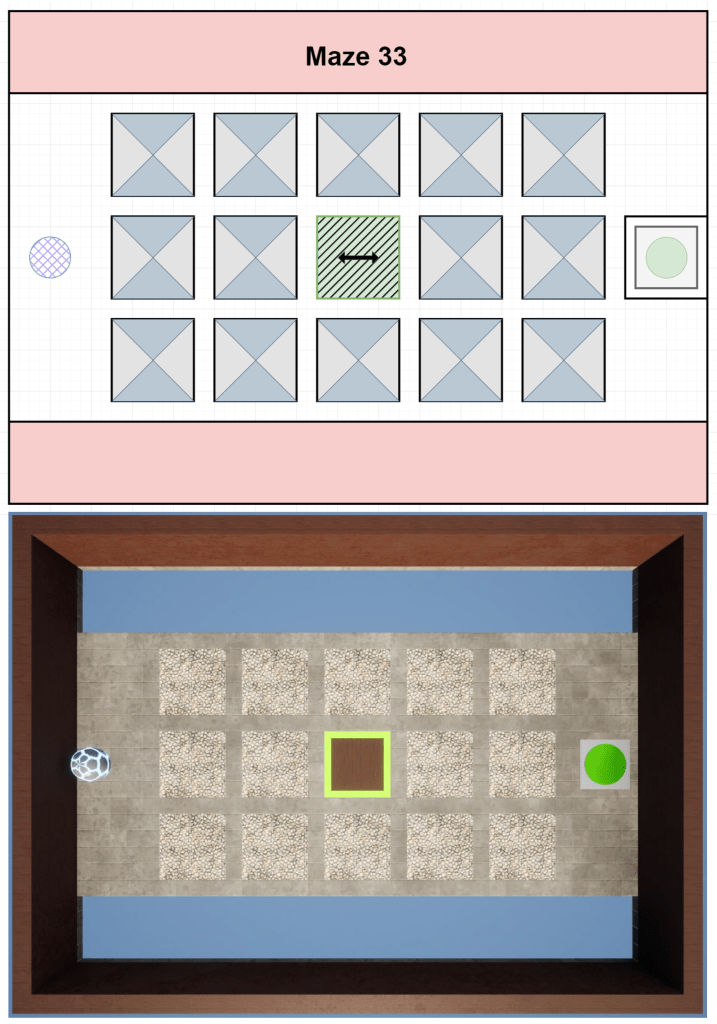
New Mechanic: Button & Activated Objects (Doors)
Design Goal: Introduce a new mechanic that would require players to adapt to a changing level while allowing further mastery of the basic controls.
Level Lowlights (Design Critique)
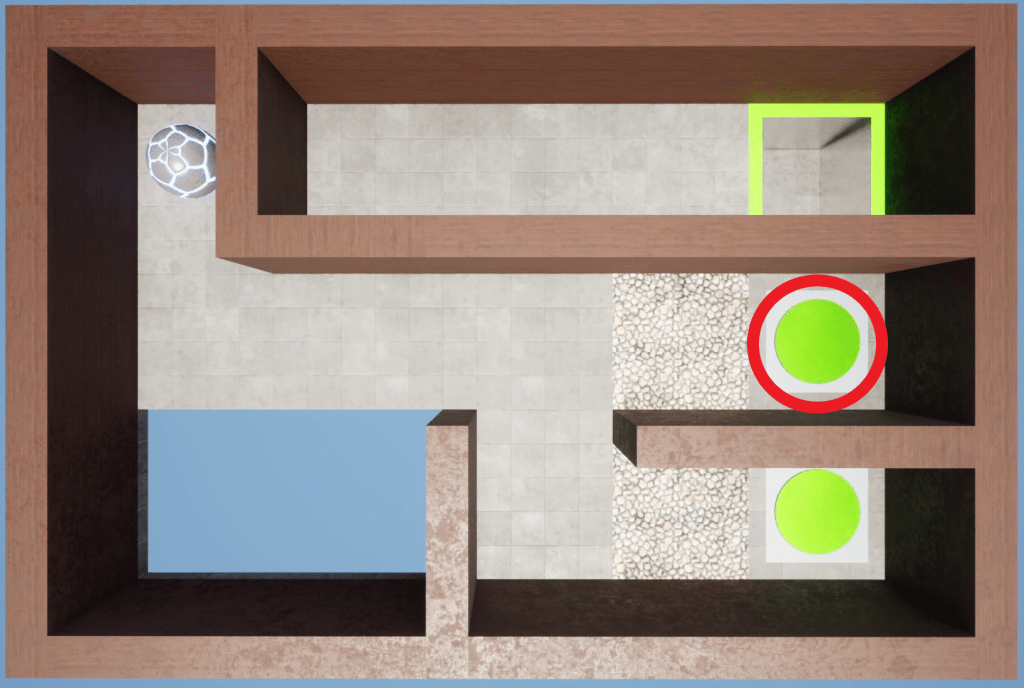
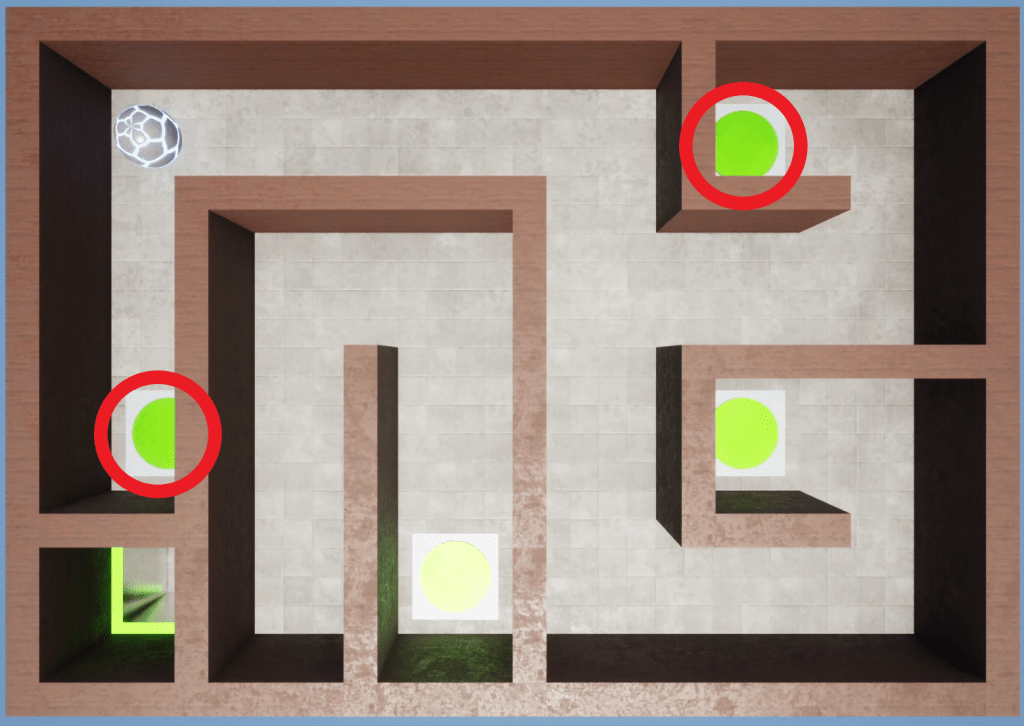
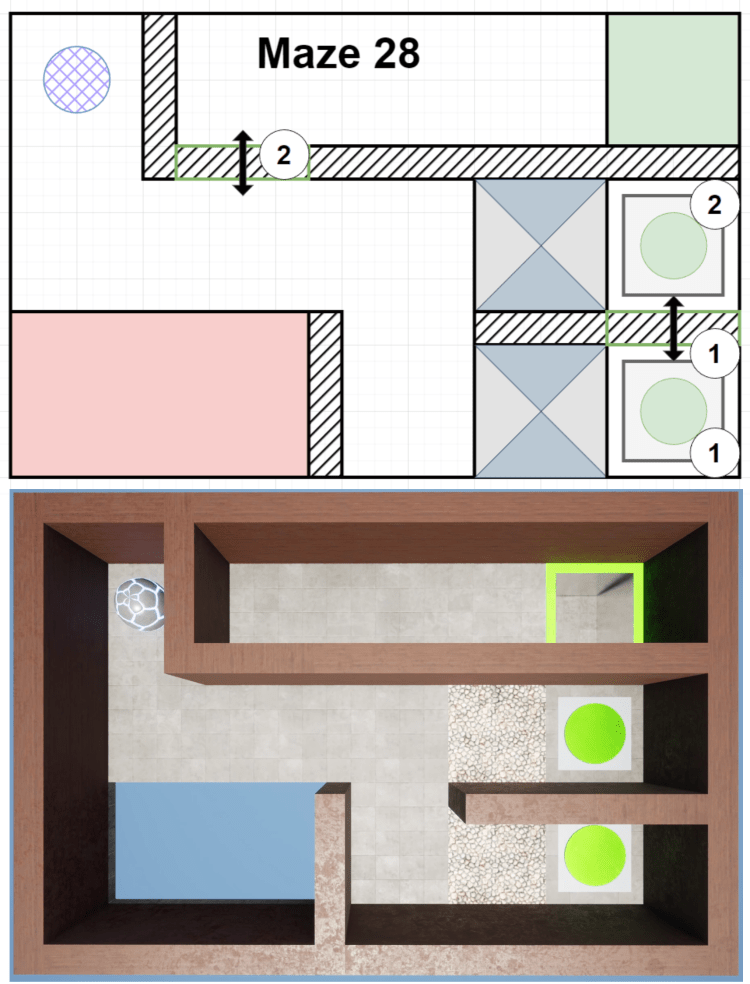
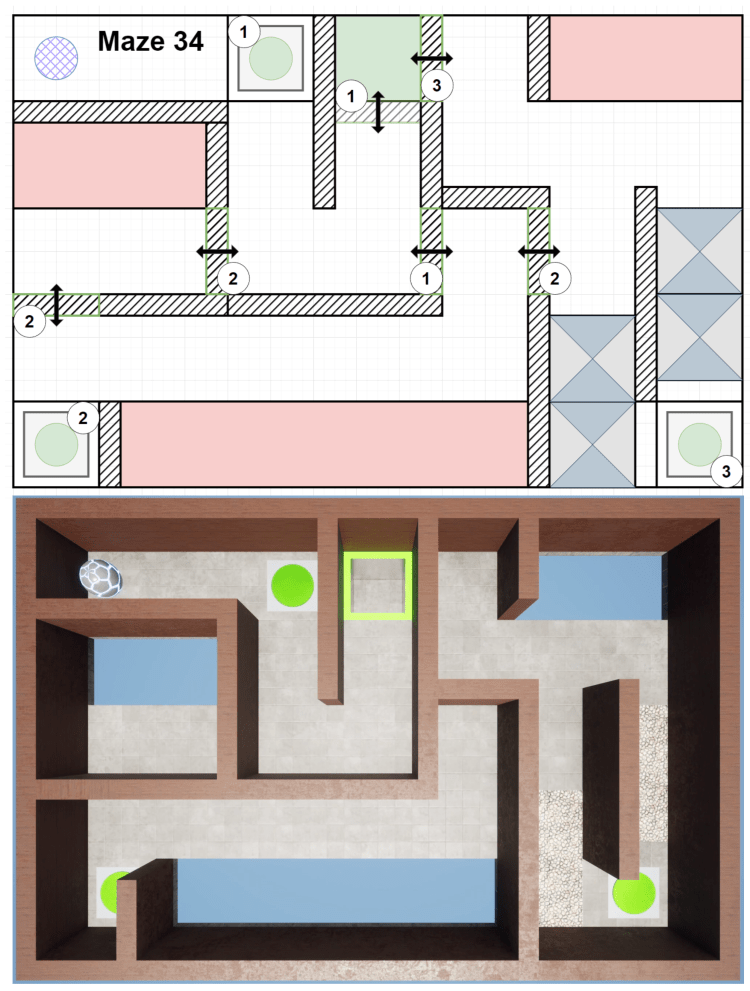
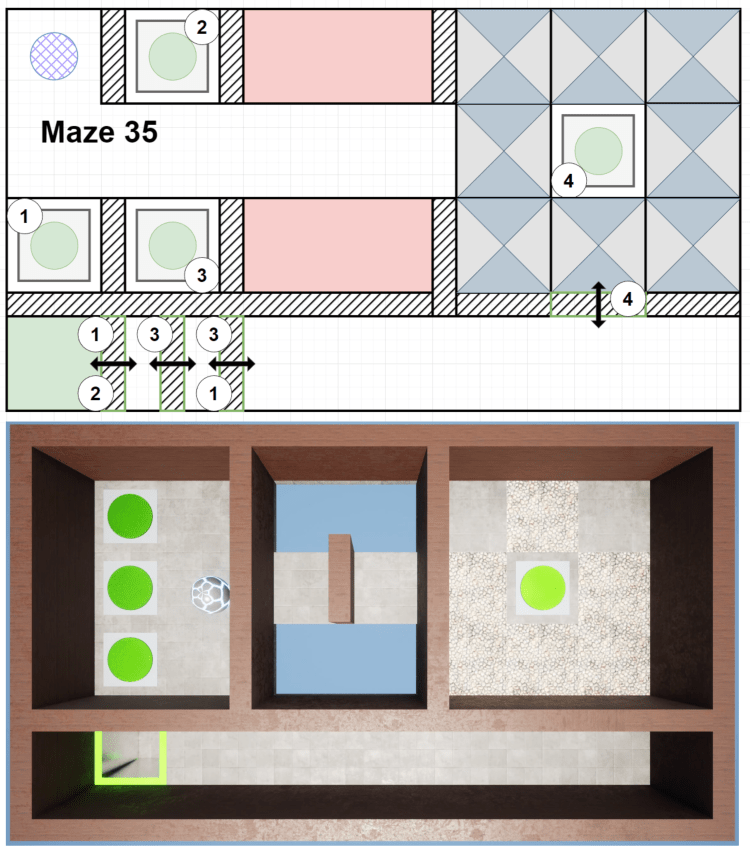
Looking back on these levels, I feel that levels 4-3 (Maze 28) & 4-7 (Maze 32) are the two weakest. Primarily because they are the levels I created with the expectations the player would fail at least once. While failure is certainly possible in many levels, failure here is due to conditions in the design rather than challenging mechanics.
The buttons that trigger a fail-state are circled in the images below.
While I don’t inherently dislike this concept, I think I executed it poorly as it is entirely guessing, there are no indicators at all for the player on the correct path. However even if they were designed better, they are out of place among the rest of the levels. Every other level is linear, or allows the player to solve it. In hindsight, these two mazes simply don’t belong here.
Maze 28
Maze 32
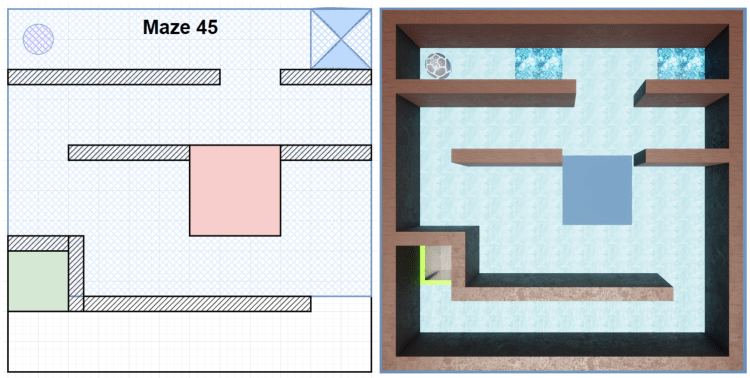
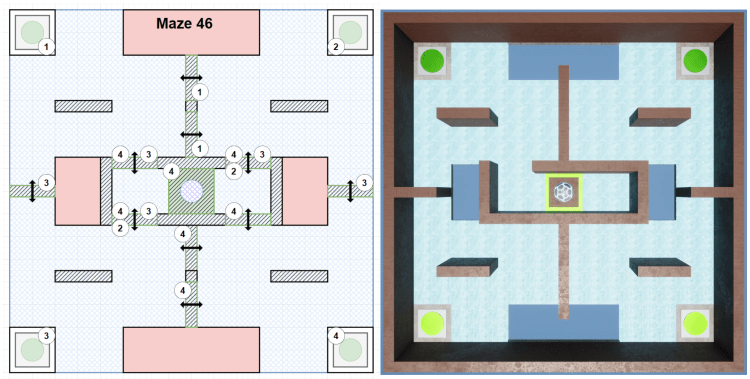
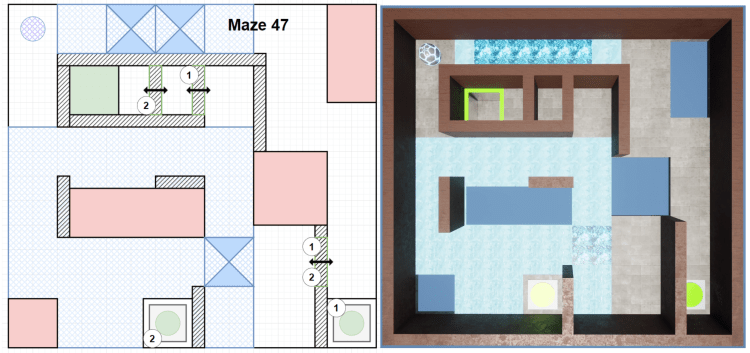
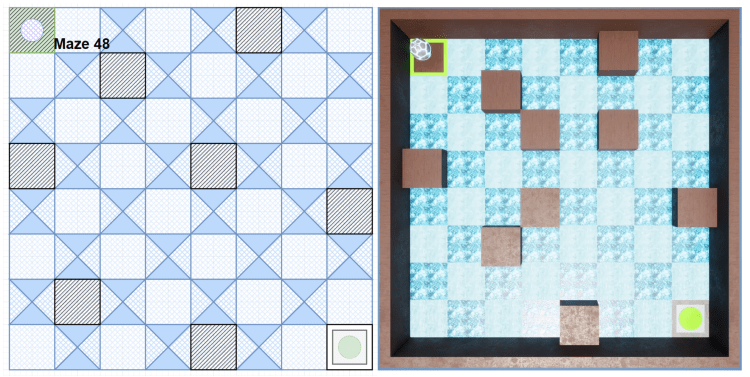
Zone 5: Slip & Slide
New Mechanic: Slippery Floors (Ice)
Design Goal: Challenge the player with the first altering of basic ball physics and require more precise control of the board than ever before.
Level Highlights
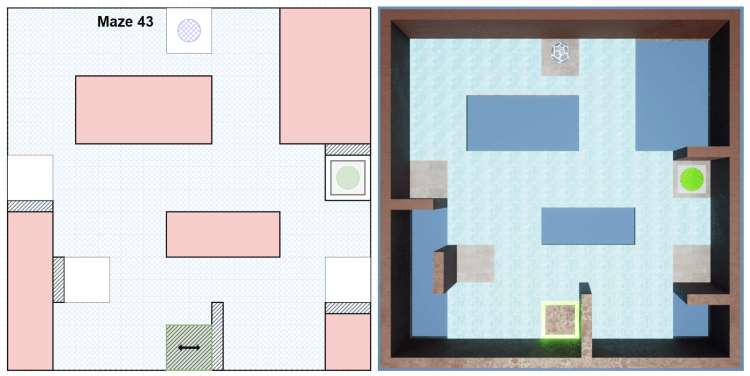
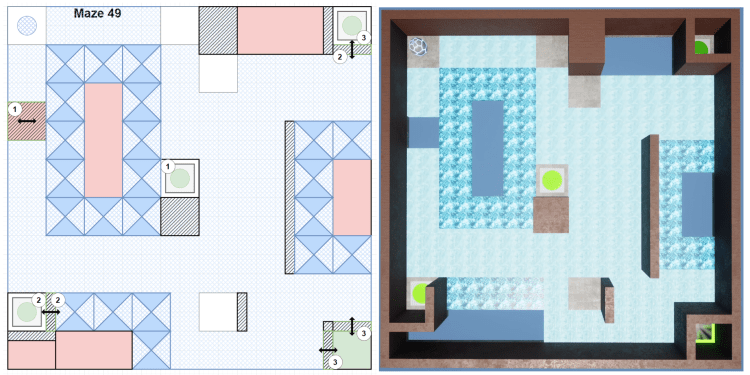
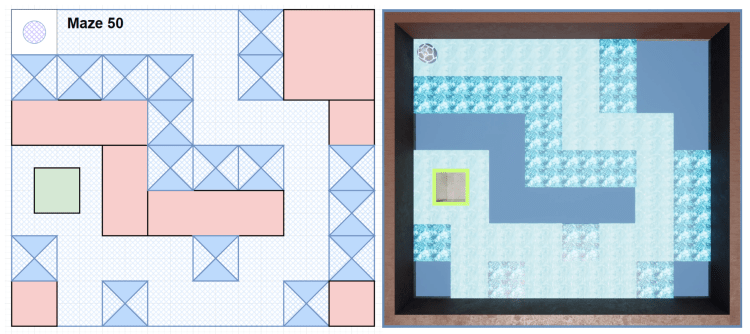
My favorite levels that best exemplify how I imagined the mechanic working come from Maze 43 & Maze 49, which I call my Pokémon-lite levels. I didn’t want the ice to take complete control from the player, but with a loss of friction this seemed like a fun design methodology to explore. Players could still navigate the mazes freely if they wished and were capable enough, but the Mazes were designed to have a “correct” path.
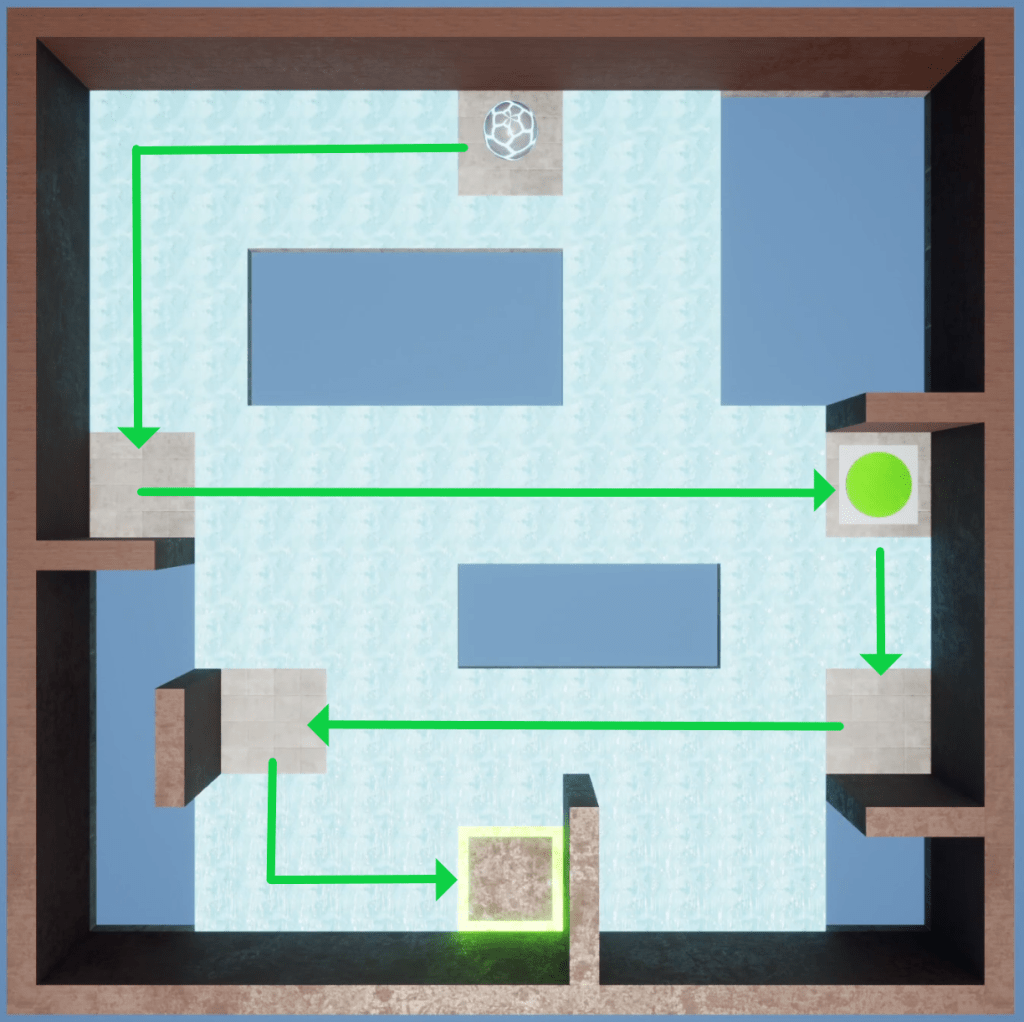
Maze 43
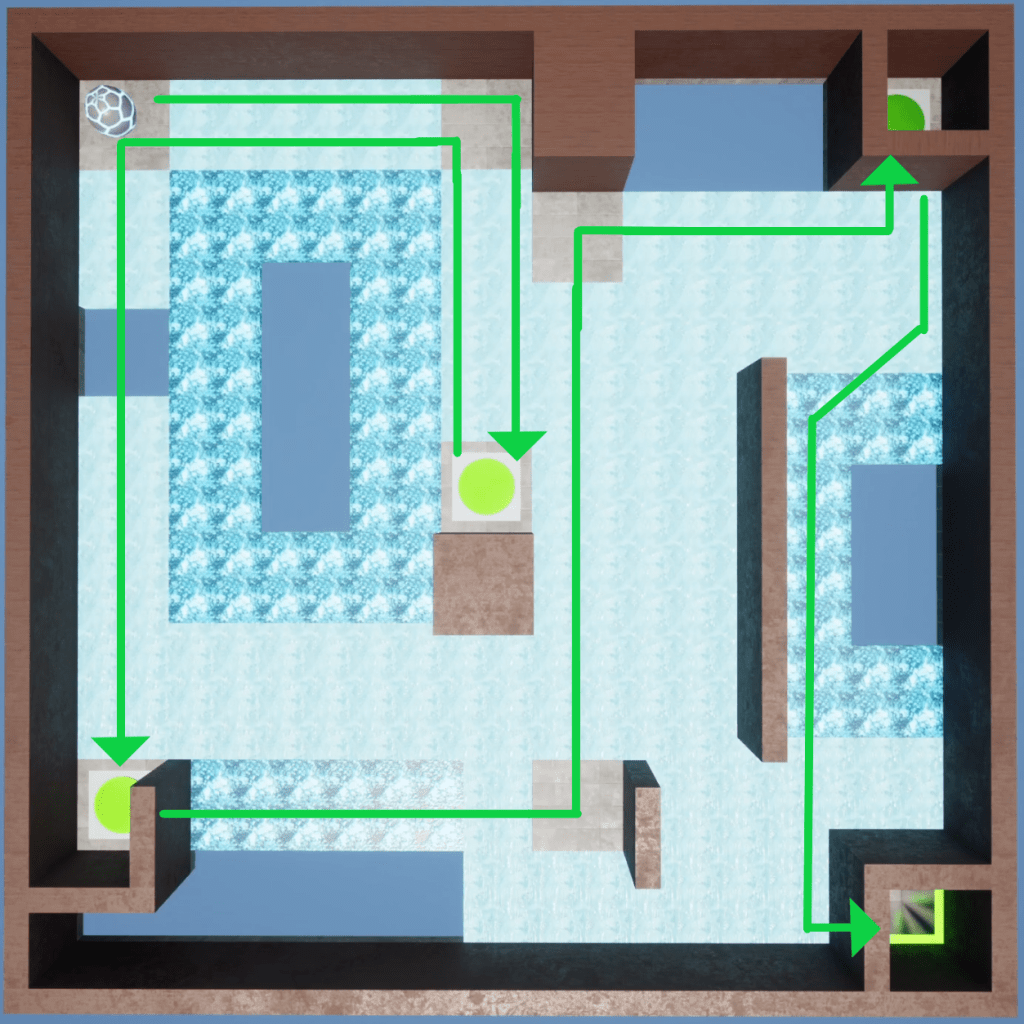
Maze 49